Hello!Welcome to Shanghai Sheeny Metal Materials Co.,Ltd. Website!
Hotline:+86-400-6632276

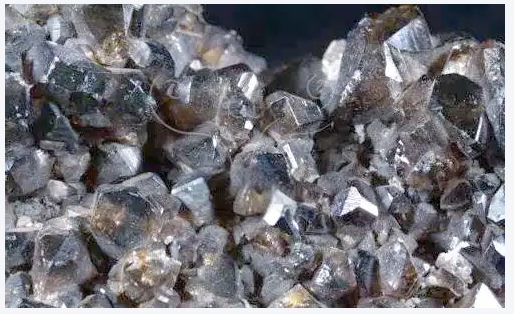
According to the latest spot market data released by ccmn.cn on April 30, 2026, the average market price of domestic indium (In ≥ 99.995%) stood at 4,650 RMB/kg, with a price range of 4,600–4,700 RMB/kg, up 110 RMB from the previous trading day, a single-day increase of approximately 2.42%.
Supply Side: A “Rigid Shortage” Under Triple Pressures
From a supply perspective, the global indium market is facing a rigid shortage driven by three interwoven factors: resource endowment, production model, and policy control.
As a typical scattered metal, more than 80% of global indium supply comes as a by-product from smelting of main metals such as zinc and tin. Its output is entirely subject to the industrial cycles and environmental policies of those main metals, leaving its own supply elasticity near zero. Although China dominates global proven reserves and production, primary indium production has shown structural contraction in recent years due to environmental restrictions and the shutdown of small and medium smelters.
More critically, extremely low inventory levels amplify market fragility. Industry data shows that global tradable indium inventories have fallen to a historically low level equivalent to only about one month of consumption, virtually eliminating market buffering capacity.
Meanwhile, policy tightening is unprecedented. China has listed indium as a critical strategic mineral and imposed strict export controls. According to the latest export licensing catalogue, indium and indium products require export permits. Recently, authorities further imposed export controls on tungsten, tellurium, bismuth, molybdenum, and indium related items, explicitly prohibiting exports for military use to certain countries. These measures have drastically reduced global available supply, locking supply elasticity at the source.
Demand Side: Structural Explosion Driven by Green Energy and AI
On the demand side, a structural explosion is being led by the green energy and artificial intelligence revolutions.
Traditional display panels (ITO targets), which account for about 70% of indium consumption, remain stable. However, the real growth engines come from two frontier technology tracks:
Photovoltaic (PV) – Heterojunction (HJT) Cells
Next generation HJT cell technology is accelerating industrialization. The indium consumption per unit for its transparent conductive layer is several times that of conventional technologies. With global HJT capacity expected to grow significantly and come online, potential demand could surpass total global annual supply, making it the largest consuming sector.
AI Computing Power – High Speed Optical Communication
Indium phosphide (InP) is an indispensable substrate material for manufacturing core chips in high speed optical modules, known as the “backbone heart” of AI high speed optical interconnection. orders from leading manufacturers are booked far in advance, with annual demand growth maintaining a high rate and a significant global InP substrate gap.
Additionally, the localization of semiconductor production is accelerating. Domestic enterprises are increasing InP production line layouts, further driving demand for high purity indium raw materials. This demand pattern – traditional sectors stabilizing, emerging sectors exploding – creates a huge gap against near zero supply elasticity.
Policy Environment: Reshaping Global Trade and Value Positioning
At the national strategic level, policies are systematically reshaping the global trade landscape and value positioning of indium.
Domestically, besides ongoing volume controls and export permit management, policies are strongly promoting industrial chain upgrading toward high end and self reliant development. This year, indium export quotas have been compressed to about 30% of annual output, with even stricter approval for high purity indium exports. Internationally, precise export controls targeting specific countries and uses highlight indium’s strategic bargaining chip role in the technological rivalry between major powers. These measures aim not only to secure raw material supply for domestic high end manufacturing but also to enhance China’s global value chain leverage through controlling key resources. Policy uncertainty has become a key variable affecting global indium supply chain stability and market expectations.
Macro Perspective: Geopolitics and Financial Flows Add Volatility
From a broader global economic and geopolitical perspective, multiple factors are injecting additional volatility and risk premiums into indium prices.
Global geopolitical tensions, especially risks to key resource corridors, heighten supply chain security concerns, pushing up risk premiums for strategic metals including indium. Meanwhile, indium has both commodity and financial attributes. Against the backdrop of US dollar index fluctuations, changing global liquidity expectations, and high precious metal prices, capital is accelerating into the minor metal market for hedging and pursuing scarce assets.
Notably, retail investors buying indium ingots through e commerce platforms as an investment has increased. While this reflects market recognition of its value, it may also amplify price volatility due to the market’s small size and introduce liquidity risks. This strengthening financial attribute could partially decouple short term price movements from pure fundamental drivers.
Outlook: Short Term Volatility, Long Term Uptrend
In summary, indium’s recent strong rebound – after hitting a 10 year high and undergoing technical correction – is once again supported by its solid long term fundamentals.
In the short term, prices may oscillate at high levels due to downstream acceptance of historical high prices, fluctuating investment sentiment, and the pace of policy implementation. However, in the long term, given that supply is rigidly constrained by resource scarcity and policy, while demand is strongly driven by two major trends – PV revolution and AI computing infrastructure – the significant supply demand gap (with potential demand estimated to be several times current supply) has not fundamentally changed.
This value revaluation drama, directed by “resource nationalism,” technological revolution, and macro liquidity, is far from over. For industry players, enterprises with stable resource supply, mastery of high purity refining and target manufacturing technologies, and deep ties with leading downstream PV and semiconductor customers will occupy the most competitive positions in this profound industry transformation. Indium – the “industrial vitamin” – is stepping from behind the scenes to center stage, and its price center is gradually moving upward amid volatility, likely becoming the new normal for the global high tech industry in the coming years.
Source: ccmn.cn (Changjiang Nonferrous Metals Net)
Disclaimer: The content is sourced from the internet. All reproduced articles are for learning and exchange purposes only, not for commercial use. If there is any infringement, please contact us promptly and we will remove it immediately. Thank you.

Room 310, Building 1, No. 326, Jinyuan Third Road, Jiading District, Shanghai
Tel : +86-400-6632276
Mobile&Whatsapp : +86 19916550170
Email : sales@eternal-element.com
Scan to wechat :


