Hello!Welcome to Shanghai Sheeny Metal Materials Co.,Ltd. Website!
Hotline:+86-400-6632276

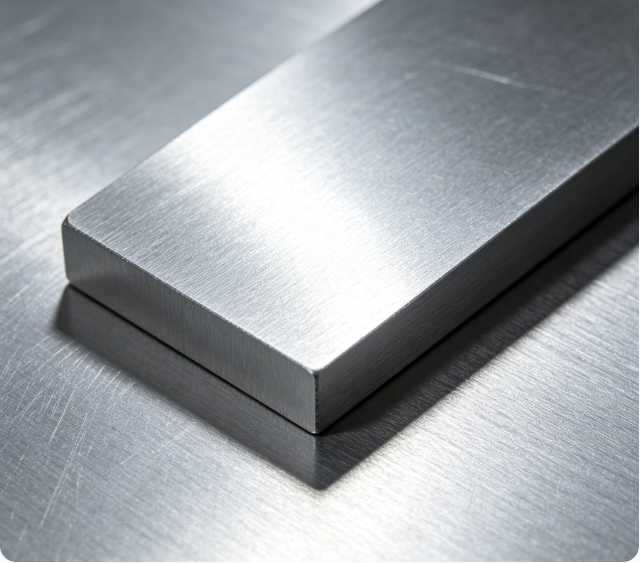
Chinese researchers have made new breakthroughs in tuning the strength and plasticity of magnesium alloys. As lightweight demands grow in aerospace, rail transportation, and electronics, magnesium alloys—among the lightest metal structural materials—face a common challenge: high strength often comes at the cost of low plasticity, especially in rare-earth-free high-strength alloys.
To address this issue, a research team systematically studied Mg‑Sn‑Ca based alloys by adjusting aluminum (Al) content. They analyzed the relationship between microstructure evolution and mechanical properties. The findings were published in Acta Metallurgica Sinica (2020, Vol.56, No.10, pp.1423-1432).
Distinct performance variations with different Al content
Three Mg‑2.5Sn‑2Ca alloys with 2%, 4%, and 9% Al (mass fraction) were prepared. Their microstructures and mechanical responses were compared in as-cast and extruded states. Changing Al content altered the type and distribution of nano‑scale second phases, which in turn affected dynamic recrystallization behavior and dislocation density, leading to a predictable trade‑off between strength and plasticity.
At 2% Al: High‑density G.P. zones formed, strongly pinning grain boundaries and inhibiting recrystallized grain growth. The extruded alloy achieved an average grain size of only ~0.5 μm with high dislocation density and sub‑grain structures. Yield strength reached ~370 MPa while elongation remained at 6.2%.
At 4% Al: Intermediate strength and plasticity were observed, showing a transition behavior.
At 9% Al: The nano‑scale second phase transformed to Mg₁₇Al₁₂, which weakly hinders dislocation motion. Dynamic recrystallization became more complete, residual dislocation density decreased significantly, and grain size increased. Yield strength dropped to ~290 MPa, but room‑temperature elongation greatly improved to 12.0%.
Continuous regulation from high strength to high plasticity
By simply adjusting Al content, the same alloy system can be continuously tuned from a high‑strength type (2% Al, suitable for load‑bearing structures) to a high‑plasticity type (9% Al, easier for subsequent forming). This provides a direct basis for engineering applications to select the appropriate composition.
A low‑cost pathway for high‑performance magnesium alloys
Compared to rare‑earth‑containing Mg alloys (e.g., with Gd, Y, Nd), the Mg‑Sn‑Ca‑Al system avoids expensive rare earths, significantly reducing raw material costs. This study reveals the underlying mechanisms by which Al content modulates recrystallization, dislocation density, and grain size through nano‑scale second‑phase control. It offers an actionable microstructure design route for developing low‑cost, non‑rare‑earth, high‑strength and high‑plasticity magnesium alloys.
Industry experts believe this research promotes practical application of magnesium alloys in lightweight scenarios and lays a foundation for further breaking the strength‑plasticity bottleneck through composite microalloying.
Published: May 22, 2026 | Category: Materials Science

Room 310, Building 1, No. 326, Jinyuan Third Road, Jiading District, Shanghai
Tel : +86-400-6632276
Mobile&Whatsapp : +86 19916550170
Email : sales@eternal-element.com
Scan to wechat :


