Hello!Welcome to Shanghai Sheeny Metal Materials Co.,Ltd. Website!
Hotline:+86-400-6632276

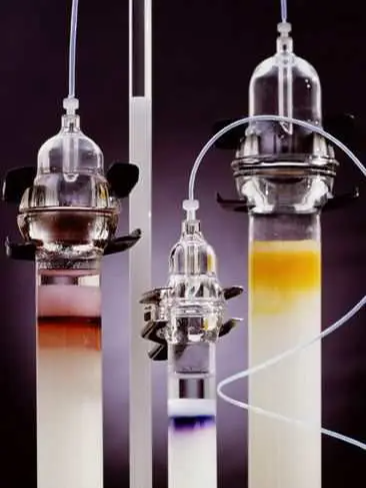
High-purity metals are essential for aerospace, electronics, new energy, and semiconductors. Even a slight increase in purity can dramatically improve conductivity, corrosion resistance, and structural stability. For years, producing high-purity metals was a bottleneck in nonferrous metallurgy. A recent review by the Kunming University of Science and Technology’s National Engineering Research Center for Vacuum Metallurgy, published in Nonferrous Metals Science and Engineering, outlines the principles, equipment, applications, and future of vacuum gasification purification – offering a clean, efficient, and short-process route for China’s high-purity metal industry.
High-purity metals are widely used: over 90% of 5N (99.999%) aluminum goes to semiconductor devices; high-purity magnesium is key for producing titanium and zirconium; high-purity铅 (lead) extends battery life; and high-purity selenium, tellurium, and gallium are vital for next-gen semiconductors. Trace impurities can ruin performance – e.g., selenium/tellurium in lead accelerate corrosion, iron/nickel in magnesium reduce corrosion resistance, and iron/sulfur in copper harm conductivity.
Three main purification methods exist: zone refining (long cycle, high energy, limited scale), electrolytic refining (wet process, heavy acid waste), and vacuum gasification. The latter leverages differences in saturated vapor pressure under low pressure to selectively vaporize and condense metals. It offers a short process, high efficiency, low carbon footprint, and zero liquid/solid waste – making it the preferred choice for large-scale production.
The science revolves around saturated vapor pressure, separation coefficient, and vapor-liquid equilibrium. Under vacuum, metal boiling points drop sharply, and evaporation rates rise. By controlling temperature and vacuum level, the target metal vaporizes first, while impurities like silver, copper, and tin remain in the residue. For systems prone to intermetallic compounds (e.g., lead-zinc), high-temperature dissociation and directional condensation break stable compounds for deep impurity removal.
On equipment, China has progressed from single-stage to multi-stage, continuous, and graded-temperature condensation systems. Vertical single-stage units are simple and easy to inspect. Batch multi-stage condensers can recover arsenic, antimony, and tellurium in one step. Horizontal graded condensation furnaces use a temperature gradient to separate magnesium from sodium, potassium, and zinc. Three-stage vacuum gasification purifies tellurium to 6N (99.9999%). Continuous-batch hybrid systems have successfully separated high-antimony crude tin with significantly lower energy use.
Industrial results are strong: High-purity magnesium – one treatment upgrades industrial magnesium to 99.9995% with >94% recovery. High-purity zinc – multiple Chinese plants produce 6N zinc stably, replacing electrolysis and zone refining. High-purity lead – vacuum gasification-directional condensation removes >99% of impurities in a single run; a 2,000 t/year line is now serving high-end lead-acid batteries. The technology also works for calcium, indium, selenium, tellurium, arsenic, gallium, and other strategic metals, with multiple domestic production lines achieving material self-sufficiency.
Challenges remain: limited separation for impurities with similar vapor pressure (e.g., Pb-Bi, Zn-Cd); low versatility of industrial equipment; and high energy use for long holding times. Future directions include combining molecular simulation with experiments to understand trace impurity behavior, refining vacuum dissociation theories for arsenic, gallium, and germanium, developing more efficient and continuous equipment with lower energy consumption, and expanding to reactive metals like lithium/sodium as well as secondary resource recycling.
As high-end manufacturing demands ever-higher metal purity, vacuum gasification purification will continue driving green, high-efficiency production – helping China’s high-purity metal industry move from follower to leader, and ensuring stable, reliable raw material supplies for strategic emerging sectors.
Disclaimer: This content is based on publicly available sources, shared for educational and informational purposes only. Please contact us for any copyright concerns.

Room 310, Building 1, No. 326, Jinyuan Third Road, Jiading District, Shanghai
Tel : +86-400-6632276
Mobile&Whatsapp : +86 19916550170
Email : sales@eternal-element.com
Scan to wechat :


