Hello!Welcome to Shanghai Sheeny Metal Materials Co.,Ltd. Website!
Hotline:+86-400-6632276

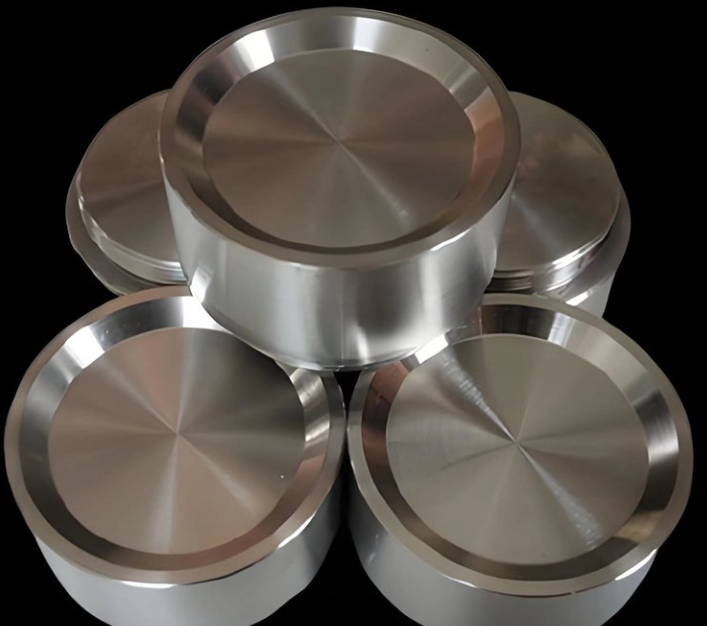
Sputtering targets are essential consumables in semiconductor physical vapor deposition (PVD) processes. During chip manufacturing, high-energy particles bombard the target surface, dislodging atoms that deposit onto silicon wafers or glass substrates to form nanoscale functional films. The quality of these films—including purity, uniformity, and microstructure—directly impacts chip performance and manufacturing yield. Targets are categorized by material type into metal targets (e.g., aluminum, copper, titanium, tantalum), alloy targets (e.g., nickel-chromium, cobalt-tungsten), and ceramic targets (e.g., ITO, titanium nitride). Among these, semiconductor manufacturing demands the highest purity levels, typically 5N (99.999%) and 6N or above for advanced process nodes.
The incorporation of rare earth elements is reshaping the technological roadmap for sputtering targets. Small amounts of rare earth doping can significantly improve electrical conductivity, oxidation resistance, and microstructural uniformity, extending target service life and enhancing thin-film deposition quality. Consequently, demand for rare earth-containing targets is rising in high-performance chips, advanced memory devices, and specialty components. China dominates the global rare earth supply chain: according to industry statistics, the country holds about 51.6% of global rare earth reserves, controls 85–95% of rare earth smelting and separation capacity, accounts for over 90% of heavy rare earth processing, and possesses more than 85% of global sputtering target manufacturing capacity. This concentration means the supply of rare earth targets is highly dependent on China’s rare earth export policies.
In October 2025, China’s Ministry of Commerce, with State Council approval, imposed export controls on technologies related to seven heavy and medium rare earth elements: samarium (Sm), gadolinium (Gd), terbium (Tb), dysprosium (Dy), lutetium (Lu), scandium (Sc), and yttrium (Y). Restrictions cover raw materials, compounds, metals, targets, and high-performance magnets. In January 2026, further controls were placed on dual-use items exported to Japan. These measures have directly disrupted rare earth target procurement channels for overseas semiconductor companies. At the same time, the surge in AI computing power is driving expansion in advanced logic and HBM memory manufacturing, pushing semiconductor target demand into a high-growth phase. The simultaneous supply contraction and demand expansion have created a significant mismatch.
On the pricing front, in the first quarter of 2026, domestic Chinese target manufacturers generally raised prices by over 20%, with some specialty metal targets seeing increases of 60–70%. Japan’s Nikko Metals, which holds more than 50% of the global sputtering target market, has significantly revised upward its full-year revenue guidance, citing rising raw material costs for copper among other factors. Industry data show capacity utilization for sputtering targets exceeding 97%, indicating a tight supply chain.
The global sputtering target market has long been dominated by US and Japanese companies: Nikko Metals (Japan), Honeywell (US), Tosoh (Japan), and Praxair (US) together account for more than 80% of the semiconductor target market. Driven by rare earth export restrictions and supply chain security concerns, domestic Chinese target producers are finding a window for substitution. Jiangfeng Electronics (KFMI), the leading domestic semiconductor target manufacturer, has achieved量产 (mass production) and supply of targets for advanced process nodes, serving major fabs including TSMC, Samsung, Intel, and SMIC, and has realized self-sufficiency in high-purity metal materials globally. Youyan New Materials holds a leading domestic market share in copper and cobalt targets, with products spanning metal targets, rare earth materials, and optoelectronic materials. Olight New Materials focuses on copper, aluminum, titanium, and molybdenum targets for semiconductors, as well as ITO targets for displays and targets for photovoltaics. Ascentech supplies sputtering targets, evaporation materials, and coating accessories, covering displays, semiconductors, photovoltaics, and optical coatings.
From a value chain perspective, upstream target manufacturing involves metal purification (wet chemical, pyrometallurgical, and physical methods); midstream target fabrication includes powder metallurgy, plastic working, hot pressing, and sintering; downstream applications cover semiconductors, display panels, and photovoltaics. Semiconductor applications require the highest purity (5N and above), display panels require 5N, and photovoltaics typically require 4N. The precision of purification and fabrication determines whether a target can enter high-end semiconductor supply chains, and customer qualification cycles typically last two to three years, creating high entry barriers.
Against the backdrop of continued rare earth export controls and sustained AI-driven demand, the supply-demand landscape for rare earth sputtering targets is undergoing structural change. Overseas capacity expansion is constrained by raw material availability, while domestic players are steadily advancing their capabilities in high-purity metal production and target fabrication. The price increases driven by supply-demand imbalances are not merely a short-term phenomenon but also reflect a broader restructuring of global semiconductor critical material supply chains. For chip manufacturing, the stable supply and performance improvement of sputtering targets are becoming key indicators of industrial chain security.

Room 310, Building 1, No. 326, Jinyuan Third Road, Jiading District, Shanghai
Tel : +86-400-6632276
Mobile&Whatsapp : +86 19916550170
Email : sales@eternal-element.com
Scan to wechat :


