Hello!Welcome to Shanghai Sheeny Metal Materials Co.,Ltd. Website!
Hotline:+86-400-6632276

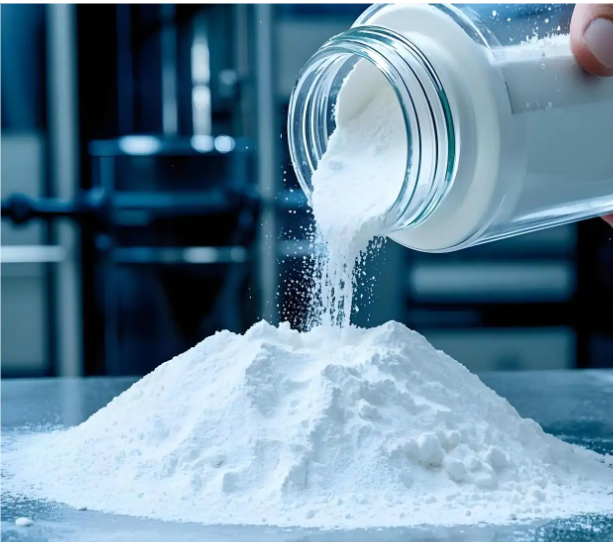
Researchers from Xi’an Jiaotong University have developed a novel, low-cost method to remove aluminum impurities from magnesium — a long-standing challenge in the industry. The technique, inspired by everyday furnace scale, has already been deployed on industrial production lines.
From 109.5 to 6.3 ppm: A Leap in Magnesium Purity
Magnesium is a strategic metal with vast potential in lightweight transport, high end metallurgy, and biomedical applications. About 80% of the world’s primary magnesium is produced via the silicothermic (Pidgeon) process. While cost effective, this method suffers from high and highly variable impurity levels — especially aluminum.
In actual production, aluminum content can swing from 21 to 845 mg/kg — a range that crosses five purity grades. This instability not only hinders the use of magnesium in advanced fields such as electronics, nuclear grade zirconium, and biomedical devices, but also reduces producer profits due to large price differences between purity levels.
Now, a team led by Professor Zhiwei Shan from the School of Materials Science and Engineering at Xi’an Jiaotong University has proposed a completely new purification strategy. The work was published in Nature Materials. The new method efficiently and cheaply removes aluminum under industrial conditions, enabling large scale production of low aluminum, high purity magnesium.
“Often, the key to solving an industrial puzzle is not found in complex theoretical derivations, but in the most mundane, unappealing, and even annoying details of production,” says Shan, the corresponding author.
The Hidden Clue in “Useless” Scale
In 2023, the team discovered that during the silicothermic process, aluminum mainly exists as gaseous aluminum fluoride (AlF₃). During condensation, it co deposits with magnesium – the root cause of contamination. After analysing the scale that forms on the inner walls of reduction retorts, they hypothesized that calcium oxide (CaO) could effectively remove aluminum.
Doctoral student Rui Zheng, the first author, confirmed the hypothesis experimentally: adding CaO reduced the aluminum content from about 109.5 mg/kg to 6.3 mg/kg — a removal efficiency exceeding 90%.
Thanks to a long standing collaboration with Taidai Coal Chemical (a leading raw magnesium producer) and the Shaanxi Provincial Magnesium based New Materials Pilot Base, the team immediately transferred the findings to industry. Industrial trials showed remarkable results.
Cost Effective and Scalable
After several rounds of optimisation, the team began using calcined dolomite (a mixture of CaO and MgO) as a filter medium. Calcined dolomite is cheaper, more accessible, and recyclable. The proportion of magnesium meeting the high purity standard (Mg9998) jumped from nearly 0% to 83.3% — a shift from “occasional success” to “stable production”.
Even more impressive: the purification cost is about 96% lower than mainstream vacuum distillation technology. This provides a practical, low cost route to large scale production of low aluminum high purity magnesium – a stable, high quality raw material for downstream high end applications.
The “scale inspired” approach can also be extended to control other impurities in magnesium. Before the patent was granted, the technology had already been adopted on industrial production lines, generating significant economic and social benefits.
Why Removing Aluminum Matters More Than You Think
“The economic benefits are substantial, but we are even more excited about the ripple effects across the entire industrial chain,” says Shan.
Titanium sponge production: Magnesium is used as a reductant to produce titanium. If the raw magnesium contains aluminum, the aluminum transfers to titanium and is extremely difficult to remove, degrading the quality of chip grade titanium.
Biomedical applications: Biodegradable magnesium based bone screws are promising, but high aluminum levels can accumulate in the human body and increase the risk of Alzheimer’s disease.
Corrosion resistance: A common belief says that if a magnesium alloy already contains added aluminum, a little residual aluminum in the raw magnesium doesn’t matter. The team’s recent experiments prove otherwise – even less than 100 ppm of aluminum significantly worsens the corrosion resistance of pure magnesium.
Thus, this purification technology not only raises producers’ profits but also benefits downstream sectors – including titanium, electronics, and medical devices – and may eventually lead to revised industry standards.
“Within Seven Steps, There Must Be an Antidote”: A New Research Mindset
Looking back, the key was finding the right approach. The team noticed a strange phenomenon in factory data: the aluminum content of magnesium produced on the same day fluctuated wildly, even though the raw materials, operators, and process parameters were essentially stable. “That was logically inexplicable,” says Shan.
This “inexplicable” detail drove them to the production site itself. They focused on the hard scale that forms daily at the mouth of the reduction retorts – a nuisance that workers have to scrape off by hand because it affects feeding and heat transfer.
Systematic analysis of this “annoying scale” revealed a stable “fluoro alumino calcium oxygen” compound. Meanwhile, previous research had already shown that aluminum impurities in magnesium come from aluminum fluoride.
The two clues converged: if the scale is rich in calcium, fluorine, aluminum and oxygen, could CaO be used the other way – to actively “capture” the aluminum from AlF₃, turn it into a stable compound, and precipitate it as scale – thus efficiently separating aluminum from magnesium?
That moment of clarity – discovering that the despised, daily removed furnace scale actually held the core secret to controlling aluminum fluctuations – was the breakthrough. The team has since extended this approach to remove other impurities, providing a new paradigm for metal purification.
Professor Shan emphasises that the most impressive part of the research was not any single technical hurdle, but the “within seven steps, there must be an antidote” mindset – solving problems by looking for answers on the factory floor, using the problem itself as a guide.
Reference
This article is based on a report by Li Yuan for China Science Daily, published on April 16, 2026, and relayed by the Shaanxi Provincial Department of Science and Technology.
Disclaimer: This content is sourced from the internet. It is shared for learning and exchange purposes only, not for commercial use. If any copyright infringement occurs, please contact us immediately for removal.

Room 310, Building 1, No. 326, Jinyuan Third Road, Jiading District, Shanghai
Tel : +86-400-6632276
Mobile&Whatsapp : +86 19916550170
Email : sales@eternal-element.com
Scan to wechat :


