Hello!Welcome to Shanghai Sheeny Metal Materials Co.,Ltd. Website!
Hotline:+86-400-6632276

According to recent data from UK-based research firm Argus Media, the price of rare earth yttrium in the European market surged from approximately 6perkilograminearly2025to6perkilograminearly2025to850 per kilogram on February 26, 2026 — the highest level since comparable data became available in 2012.
A Japanese company that uses yttrium-based raw materials noted, "It is very difficult to replace this material with alternatives, and there has been no clear reduction in procurement volumes so far." Other data shows that approximately 65% of yttrium-containing materials or yttrium oxide products imported into the United States originate from Japan.
Metallic yttrium is a chemically reactive silvery-white metal primarily produced by reducing yttrium fluoride with metallic calcium. It tends to oxidize in air, losing its metallic luster. Under environmental conditions, metallic yttrium typically exists in forms such as Y₂O₃, YCl₃, YH₃, Y(OH)₃, and intermetallic compounds.
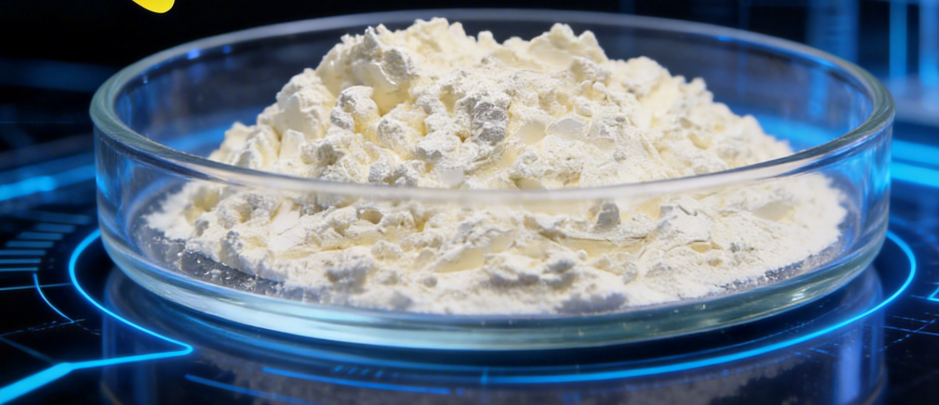
Yttrium Oxide Powder
Among rare earth elements, yttrium stands out for its wide range of applications. It can be used in light-emitting diodes (LEDs) and medical laser equipment, as a coating material for semiconductor manufacturing equipment components, and in defense applications as a material that enhances the heat resistance of aircraft engines.
Yttrium is primarily distributed in China, India, the United States, Brazil, and Australia. China holds approximately 220,000 tons of industrial yttrium oxide reserves, accounting for about 43% of the world's total — the largest share globally. Within China, Jiangxi Province ranks first in yttrium oxide reserves due to its high-yttrium ion-adsorption rare earth deposits.
Applications of Rare Earth Yttrium in Luminescent Crystal Materials
Currently, rare earth yttrium is most widely used in crystal materials, including yttrium aluminum garnet (Y₃Al₅O₁₂, YAG), yttrium orthovanadate (YVO₄) single crystals, and yttrium silicate (YSiO) crystals. Among these, YAG — a synthetic colorless transparent crystal with high hardness, high melting point, and stable physical and chemical properties — has become one of the most widely used laser crystal materials. Researchers typically dope YAG with rare earth elements such as Nd, Yb, and Ce to obtain products like neodymium-doped YAG and cerium-doped YAG, thereby expanding their application range.
Beyond laser crystal materials, rare earth yttrium's primary application remains in luminescent materials, particularly phosphors. Yttrium-based phosphors exhibit strong light absorption capacity and high conversion efficiency, making them suitable for computer monitors, flat-panel displays, three-band fluorescent lamps, LEDs, and X-ray intensifying screens. Current mainstream products include tricolor phosphors for lighting, long-persistence phosphors, and phosphors for information displays.
Applications of Rare Earth Yttrium in Semiconductor Equipment Components
Y₂O₃'s high melting point and thermal stability allow it to maintain excellent protective performance in plasma etching environments over extended periods, making it one of the most widely used materials for plasma etching protection. Y₂O₃'s greatest advantage is its slow reaction rate in fluorine-based plasmas, which helps maintain coating surface stability — a property that makes it particularly promising for use in 8-inch and larger etching equipment. Additionally, yttrium oxide is a transparent ceramic material in the visible light range with high light transmittance, making it suitable for use as window glass in plasma etching equipment.
YAG not only offers good chemical stability and optical performance but also provides higher mechanical strength and easier processability compared to Y₂O₃. Although YAG's plasma etching resistance is slightly lower than that of Y₂O₃, it can be used as an observation window material for etching chamber equipment.
YF₃ can serve as a protective layer during F-based plasma etching, suppressing further fluoridation of the material and is considered a potential alternative to Y₂O₃. When no bias voltage is applied, chemical reactions between the coating material and fluorocarbon plasma dominate, leading to the formation of fine fluoride particles on the Y₂O₃ coating surface. In contrast, YF₃ coatings maintain surface integrity and cleanliness.
YOF exhibits high thermal and chemical stability, remaining resistant to decomposition even under high temperatures and strong acid/alkaline environments. It is regarded as a highly promising plasma-resistant coating material. Moreover, YOF's thermal expansion coefficient closely matches that of aluminum. YOF coatings prepared via thermal spraying are nearly crack-free and form highly crystalline, dense structures.
Applications of Yttrium Oxide in Biomedical Fields
Yttrium oxide is widely used in biomedical applications. For instance, yttrium oxide nanoparticles, owing to their excellent physical and chemical properties, have proven effective as protective materials and are extensively applied in antibacterial and anticancer treatments, liver protection, drug delivery, biosensors, bioimaging, fluorescence imaging, and other medical fields.
Additionally, ⁹⁰Y microspheres can travel with blood flow to liver tumors, efficiently destroying them through β-ray emission. With high radiation energy and precise treatment capabilities, they enable accurate strikes against tumors from within.
Applications of Yttrium Oxide in Aerospace
The aerospace industry requires high-performance lightweight materials. Silicon carbide, carbon fiber-reinforced carbon, and silicon carbide composites meet these requirements but undergo oxidation under high-temperature operating conditions. One solution involves applying ceramic protective coatings to the substrate. Researchers have used radio-frequency magnetron reactive sputtering to deposit Al₂O₃-Y₂O₃ coatings on Al-Y-coated surfaces and studied the oxidation behavior of Al₂O₃-Y₂O₃/Al-Y composite coatings at different temperatures and durations. The results showed that these coatings exhibit excellent thermal shock resistance.
Applications of Rare Earth Yttrium in Various Alloys
In recent years, rare earth yttrium has been widely used as an additive in steel and non-ferrous alloys within the metallurgical field. Trace amounts of yttrium can effectively modify inclusion content, size, and morphology. The resulting rare earth phases refine grain structure, suppress elemental segregation, improve microstructural uniformity, and enhance the density of alloy oxide films. These effects significantly improve various physical and chemical properties of different alloys, including mechanical properties, magnetic properties, corrosion resistance, and electrical conductivity, meeting the performance requirements for new materials in aerospace, defense, and other fields.
Applications of Rare Earth Yttrium in Superconducting Materials
Rare earth yttrium-based superconductors have gradually become an important component of high-temperature superconductors, attracting extensive research attention. After years of development, YBCO has become a core superconducting material, though its preparation technology remains relatively immature, and further improvements in process stability and performance are needed for commercialization. Rare earth superhydrides exhibit near-room-temperature superconductivity under high pressure, ushering in a new era of high-pressure superconductivity research. Yttrium superhydrides, with their rich stoichiometries and excellent superconducting properties, have garnered significant interest in the superconducting research community.
Other Applications of Rare Earth Yttrium
In solid oxide fuel cells, yttrium is commonly used in porous anode materials such as Ni-(Zr,Y)O₂-X, achieving power conversion efficiencies exceeding 60%.
Y₂O₃ nanopowder can be used in multilayer ceramic capacitors. Y₂O₃-doped BaTiO₃-based dielectrics are suitable for nickel electrode multilayer ceramic capacitors with thicknesses below 2 μm.
Y₂O₃ nanoparticle-doped ternary solid solutions of CeO₂-ZrO₂ exhibit excellent performance as oxygen storage catalysts in exhaust catalysis (such as three-way catalysts).
References:
Zhang Chi et al. Development and Applications of Rare Earth Yttrium, School of Materials Science and Engineering, Shenyang University of Technology, Materials Reports
Wen Yaoru. Preparation and Characterization of Rare Earth Yttrium Sols and Oxide Powders, Jiangxi University of Science and Technology, Master's Thesis
Liu Zhili. Controllable Preparation and Characterization of Yttrium Oxide Nanopowders, Shanghai Polytechnic University, Master's Thesis
China Powder Network (Edited by Ping An)

Room 310, Building 1, No. 326, Jinyuan Third Road, Jiading District, Shanghai
Tel : +86-400-6632276
Mobile&Whatsapp : +86 19916550170
Email : sales@eternal-element.com
Scan to wechat :


