Hello!Welcome to Shanghai Sheeny Metal Materials Co.,Ltd. Website!
Hotline:+86-400-6632276

CAS # : 7440-67-7
Molecular Formula: Zr
EC Number: 231-176-9


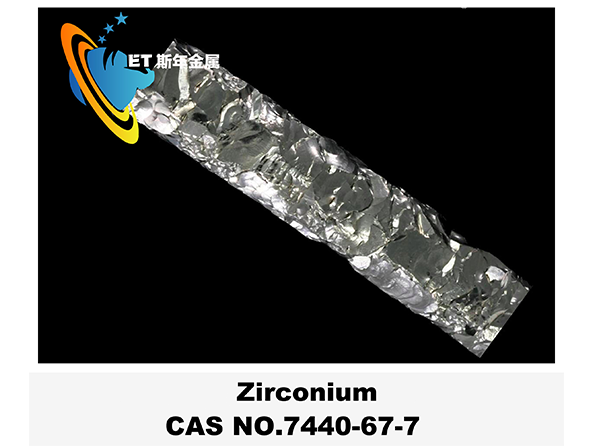
Zirconium is a chemical element with the symbol Zr and atomic number 40. Its elemental form is a high-melting-point metal and appears light gray. The surface of zirconium is prone to form an oxide film, which has a lustrous appearance and thus looks similar to that of steel. It is corrosion-resistant, soluble in hydrofluoric acid and aqua regia. At high temperatures, it can react with non-metallic elements and many metallic elements to form solid solutions.
Applications:
1. It is used for making absorbents.
2. It is used for making zirconium alloys.
3. It is used for making fuel for nuclear reactors.
4. It is used for making special metallurgical additives.
Product | Product Code | Security Data | Technical Data |
Metallic Zirconium 99.5% | ET-ZrM-01 | ||
Metallic Zirconium 99.9% | ET-ZrM-02 |
Molecular Weight | 91.22 |
Appearance | White |
Melting Point | 1852℃ |
Boiling Point | 3580℃ |
Density | 6506 kg/m3 |
Resistivity | 40.0 microhm-cm @ 20 oC °C |
Electronegativity | 1.4 Paulings |
Fusion Heat | 5.50 Cal/gm mole |
Heat of Vaporization | 120 K-Cal/gm atom at 4377 °C |
Poisson's Ratio | 0.34 |
Specific Heat | 0.0671 Cal/g/K @ 25 oC °C |
Tensile Strength | 230MPa |
Thermal Conductivity | 0.227 W/cm/K @ 298.2 K |
Thermal Expansion | (25 °C) 5.7 µm·m-1·K-1 |
Vickers Hardness | 903MPa |
Young's Modulus | 88 GPa |
Signal Word | N/A |
Disclaimer | N/A |
Dangerous Code | N/A |
Preventive Instructions | N/A |
Flash Point | Not applicable |
Risk Code | N/A |
Safety Statement | N/A |
RTECS Number | ZH7070000 |
Transportation Information | NONH |
WGK Germany | nwg |
Packaging Specifications:
Standard packaging: 50 kg/drum, 500 kg/pallet, ton bags
Sample packaging: 500 g/bag, 1 kg/bottle
| Zirconium |

Metallic zirconium readily absorbs hydrogen, nitrogen and oxygen. Zirconium has a strong affinity for oxygen. When oxygen dissolves in zirconium at 1000°C, its volume can increase significantly. The surface of zirconium is prone to form an oxide film, which has a lustrous appearance and thus looks similar to that of steel. It is corrosion-resistant, but soluble in hydrofluoric acid and aqua regia. At high temperatures, it can react with non-metallic elements and many metallic elements to form solid solutions. Zirconium has good plasticity and is easy to be processed into plates, wires, etc. Zirconium can absorb a large amount of gases such as oxygen, hydrogen and nitrogen when heated, and can be used as a hydrogen storage material. Zirconium has better corrosion resistance than titanium and is close to that of niobium and tantalum. Zirconium and hafnium are two metals with similar chemical properties and coexisting together, and they contain radioactive substances. Zirconium has a small thermal neutron capture cross-section and outstanding nuclear properties. It is an indispensable material for the development of the atomic energy industry and can be used as a structural material for reactor cores. Zirconium powder is flammable in the air and can be used as detonating detonators and smokeless gunpowder. Zirconium can be used as an additive for deoxidation and desulfurization of high-quality steel, and it is also a component of armored steel, cannon steel, stainless steel and heat-resistant steel. Zirconium is an important alloying element in magnesium alloys, which can enhance the tensile strength and processing performance of magnesium alloys. Zirconium is also a modifier for aluminum-magnesium alloys and can refine grains. Zirconium dioxide and zircon are the most valuable compounds in refractory materials. Zirconium dioxide is the main material of new ceramics and cannot be used as a heating material resistant to high-temperature oxidation. Zirconium dioxide can be used as an additive in acid-resistant enamel and glass, significantly enhancing the elasticity, chemical stability and heat resistance of glass. Zircon stone has strong light reflection performance and good thermal stability, and can be used as a blackout agent in ceramics and glass. Zirconium can absorb a large amount of gases such as oxygen, hydrogen and ammonia when heated, making it an ideal getter. For instance, zirconium powder is used as a degassing agent in electron tubes, and zirconium wire and zirconium sheet are used as grid supports and anode supports, etc. |

Room 310, Building 1, No. 326, Jinyuan Third Road, Jiading District, Shanghai
Tel : +86-400-6632276
Mobile&Whatsapp : +86 19916550170
Email : sales@eternal-element.com
Scan to wechat :


