Hello!Welcome to Shanghai Sheeny Metal Materials Co.,Ltd. Website!
Hotline:+86-400-6632276

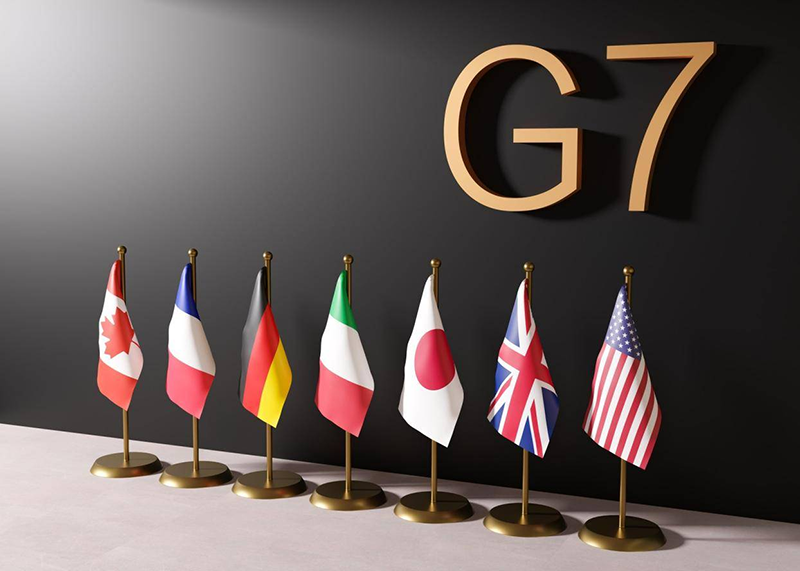
According to four sources who spoke to Reuters, the G7 and the EU are considering taking a series of measures to address the risks posed by China's dominant position in global rare earth supply. These measures include introducing a "minimum price system" to encourage Western companies to invest in rare earth development, and imposing taxes on some rare earth products exported from China.
In April last year, in response to the tariff measures imposed by the Trump administration, China implemented export controls on rare earths and rare earth magnets, causing significant impacts on buyers. Several European automobile manufacturers were even forced to suspend production for a period of time.
In May, China agreed to expedite the approval procedures for rare earth exports to European companies. In July, the situation of exports to the EU was improved. However, European companies stated that recently there has been a backlog of cases and an increase in the number of applications, posing a risk of further production suspension.
Apart from Japan, the G7 countries are highly dependent on China for a variety of key minerals ranging from rare earth magnets to metals used in batteries. As a result, they face serious national security risks.
To address this issue, the G7 proposed the "Critical Minerals Action Plan" in June and held an expert technical team meeting in the Midwestern city of Chicago this month. Australia also participated in this meeting.
Insiders said that one of the proposals discussed at the meeting was a minimum price system supported by government subsidies. This system has recently been introduced in the United States to encourage domestic production. Australia is also independently studying the establishment of minimum prices for key mineral projects including rare earths, and Canada is also positive about the minimum price mechanism.
An EU senior official stated that the EU is exploring various concepts, including a minimum price system, joint procurement, and an internal mutual trade mechanism within the G7. However, no decision has been made yet. The "minimum price guarantee" for rare earths means that even if the price is slightly higher, the G7 countries will be responsible for mining and unified acquisition, thereby strengthening the investment guarantee for related industries.
Furthermore, two other informed sources indicated that the meeting also discussed a plan to impose a similar "carbon tax" on rare earths and small-scale metal products exported from China, where the tax would be levied based on the proportion of non-renewable energy sources used in their production process.
A Trump administration official told Reuters that the US is in discussions with the G7 and the EU on a range of extensive trade measures, including tariffs and minimum price setting, to prevent China from engaging in "dumping" (unfairly selling at low prices) in the rare earth sector.

Room 310, Building 1, No. 326, Jinyuan Third Road, Jiading District, Shanghai
Tel : +86-400-6632276
Mobile&Whatsapp : +86 19916550170
Email : sales@eternal-element.com
Scan to wechat :


