Hello!Welcome to Shanghai Sheeny Metal Materials Co.,Ltd. Website!
Hotline:+86-400-6632276

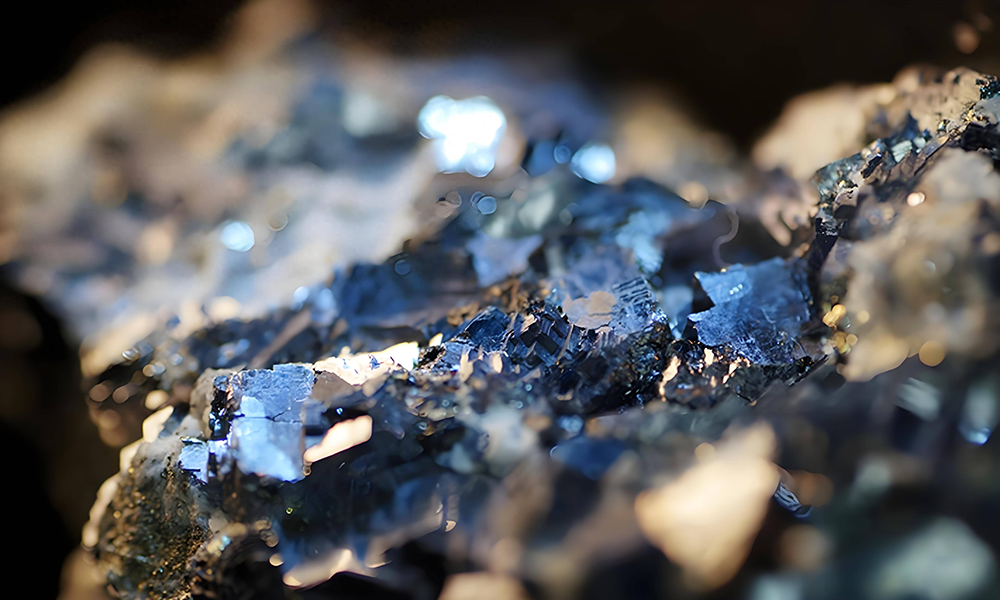
In terms of resources, China not only has abundant reserves but also enjoys advantages such as a complete range of minerals and elements, high grades, and a reasonable distribution of mining sites. According to the 2024 data from the United States Geological Survey (USGS), by the end of 2024, China's rare earth resources reserves stood at 44 million tons, accounting for 48% of the global total and ranking first in the world. Brazil, India, Australia, Russia, and Vietnam followed in that order. The global total reserves of medium and heavy rare earths (such as dysprosium, terbium, and yttrium) are approximately 1.08 million tons, with China holding about 1 million tons. Over 90% of the world's medium and heavy rare earth reserves are concentrated in southern China (such as Jiangxi, Guangdong, and Yunnan), especially for key elements like dysprosium and terbium, where China's share exceeds 95%. In early 2025, the China Geological Survey announced the discovery of a super-large ion-adsorption type rare earth deposit in the Honghe area of Yunnan Province, with potential reserves of 1.15 million tons, including over 470,000 tons of core rare earth elements such as praseodymium, neodymium, dysprosium, and terbium.
On the technical front, the rare earth cascade extraction theory established by Academician Xu Guangxian has completely transformed the trial amplification mode of the rare earth separation process from research and development to application, reducing the production cost of high-purity rare earth products by three quarters. The advantages of China's cascade extraction technology mainly lie in: ultra-high purity separation can reach over 99.9999%, meeting the extremely high purity requirements of rare earths in high-end fields such as chip manufacturing; efficient resource utilization, with new extraction precipitants increasing the recovery rate by 20% compared to foreign levels; superior environmental performance, as China's developed green extraction and separation technology has overcome the environmental pollution problems brought about by traditional acid dissolution processes, achieving a reuse rate of rare earth smelting wastewater of over 90% and reducing waste residue emissions by 70%; complete technology chain, with China holding over 60% of the world's rare earth smelting patents.
In the industrial sector, China has the most complete global supply chain for rare earth materials, covering mining, smelting and manufacturing. Through large-scale production and process optimization, the cost of rare earth separation in China is only 1/3 - 1/2 of that in Western countries, and it controls over 90% of the global processing capacity of rare earth magnets. Especially in the field of heavy rare earth separation, it has formed a global supply chain advantage. Core technologies such as cascade extraction and ion exchange can efficiently extract 17 types of rare earth elements from low-grade ores, making China the only country in the world that can provide all types of rare earth elements. According to data from the USGS, China's production in 2024 will be 270,000 tons, which is 6 times that of the United States, accounting for 69.2% of the global share and ranking first in the world. 70% of the rare earth compounds and metals imported by the United States come from China.

Room 310, Building 1, No. 326, Jinyuan Third Road, Jiading District, Shanghai
Tel : +86-400-6632276
Mobile&Whatsapp : +86 19916550170
Email : sales@eternal-element.com
Scan to wechat :


