Hello!Welcome to Shanghai Sheeny Metal Materials Co.,Ltd. Website!
Hotline:+86-400-6632276

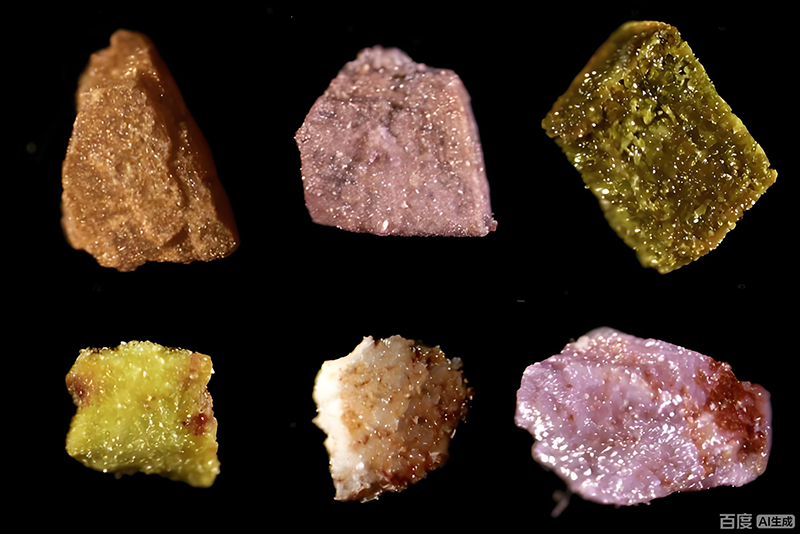
Rare earth elements first demonstrated their significant strategic value during World War II. At the Oak Ridge National Laboratory in the United States, cerium fluoride was used as a "flux" to purify rare earths on a large scale through electromagnetic separation for the atomic bomb, marking the first critical application of rare earths in cutting-edge technology and promoting early research on rare earth separation and purification. From the 1940s to the 1980s, driven by the demand for the color TV revolution and the Apollo program, supported by the solvent extraction technology developed at the Ames Laboratory, led by the commercial application and innovation of Molycorp, and guaranteed by the rare earth resources of the Mountain Pass mine in California, the U.S. rare earth industry experienced its "golden age".
The United States was not only the largest producer and technological leader but also the core consumer market, dominating the global rare earth industry chain. However, due to increasingly fierce market competition, the Mountain Pass mine in the United States was closed and sealed, and other producers also went bankrupt one after another. Molycorp, the only U.S. rare earth mining and production company, began to transport rare earth concentrates overseas for processing and separation, and the U.S. rare earth supply chain thus became almost entirely dependent on overseas sources.
In the 1990s, China's rare earth industry gradually took the global lead by virtue of lower mining costs, more advanced separation technologies and large-scale production capacity. In 2002, China's rare earth exports accounted for over 90% of the global total. However, during this period, China's rare earth industry was trapped in a dilemma of "selling resources, destroying the environment and losing technology", while also sowing the seeds for major changes in the industrial landscape. With the advantages of resources, the industrial chain and environmental protection costs, China attracted more and more capital and technological investments from rare earth enterprises in the US, Japan and Europe, and strengthened its full industrial chain layout from mining to smelting and separation to alloy production.
Chinese enterprises grew rapidly in the fierce market competition and embarked on a merger and acquisition journey. For instance, in 1995, China Nonferrous Metals Corporation and Zhongke Sanhuan acquired Magnequench, a subsidiary of the Canadian listed company Neo. In 2005, Western Mining Corporation acquired a US rare earth hydrogen storage alloy production plant. After 2006, China began to strengthen the management of rare earth production and exports, and intensify supervision over excessive mining. A series of major changes occurred in the global rare earth market. Since 2011, China's management of rare earths has become increasingly sophisticated.
It can be seen that as the main producer of rare earth raw materials, China has played a significant supporting role in the global technological revolution and industrial transformation. The Chinese rare earth industry has undergone a profound transformation from disorder to order.

Room 310, Building 1, No. 326, Jinyuan Third Road, Jiading District, Shanghai
Tel : +86-400-6632276
Mobile&Whatsapp : +86 19916550170
Email : sales@eternal-element.com
Scan to wechat :


