Hello!Welcome to Shanghai Sheeny Metal Materials Co.,Ltd. Website!
Hotline:+86-400-6632276

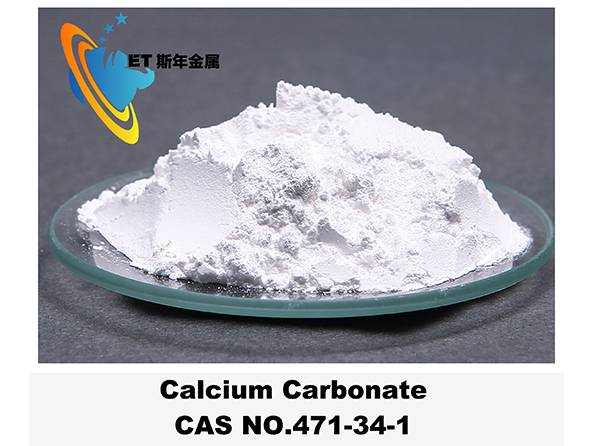
CAS # : 471-34-1
Molecular Formula: CaCO₃
EC No.: ET-Ca-01


Calcium carbonate: With the chemical formula CaCO₃, it is a white fine crystalline powder, odorless and tasteless. There are two forms: amorphous and crystalline. In the crystalline form, it can be further divided into orthorhombic system and hexagonal system (anhydrous calcium carbonate is a colorless orthorhombic crystal, and hexahydrate calcium carbonate is a colorless monoclinic crystal [10]), presenting as columnar or rhombic shapes, with a density of 2.93g/cm ³. The melting point is 1339℃ (decomposes at 825-896.6℃), and the melting point is 1289℃ at 10.7MPa. Insoluble in alcohol, soluble in ammonium chloride solution, and almost insoluble in water.
Our company's high-purity calcium carbonate is produced through ion extraction and separation technology using conventional calcium carbonate raw materials to remove impurities. It is currently the only known domestic enterprise capable of mass-producing high-purity calcium carbonate.
Applications:
1. For calcium vanadate crystals (Ca3(VO4)2).
2. It is used for calcium triborate oxide yttrium (YCOB) crystals.
3. It is used in barium titanate calcium-based transparent ceramics.
4. It is used for the preparation of calcium fluoride-based transparent ceramics.
5. For calcium carbonate chewable tablets.
| Product | Product Code |
Security Data |
Technical Data |
|
Calcium Carbonate 99.995% |
ET-Ca-01 |
| Molecular Formula | CaCO₃ |
| Molecular Weight | 40.07 |
| Appearance | Silvery |
| Melting Point | 839°C |
| Boiling Point | 1484°C |
| Density | 1.55 g/cm3 |
| Solubility In H2O | N/A |
| Resistivity | 3.91 microhm-cm @ 0 °C |
| Electronegativity | 1.0 Paulings |
| Heat of Vaporization | 36.74 K-Cal/gm atom at 2467°C |
| Poisonby | 0.31 |
| Specific Heat | 0.156 Cal/g/K @ 25°C |
| Tensile Strength | N/A |
| Thermal Conductivity | 2.01 W/cm/K @ 298.2 K |
| Thermal Expansion | (25 °C) 22.3 µm·m-1·K-1 |
| Vickers Hardness | N/A |
| Young's Modulus | 20 GPa |
| Signal Word | Danger |
| Risk Statement | N/A |
| Dangerous Code | H261 |
| Preventive Instructions | P231+P232-P280-P233-P370+P378c-P335+P334-P402+P404-P501a |
| Flash Point | Not applicable |
| Risk Code | N/A |
| Safety Statement | N/A |
| RTECS Number | N/A |
| Transportation Information | UN 1401 4.3 / PGII |
| WGK Germany | 3 |
Packaging Specifications:
Standard packaging: 50 kg/drum, 500 kg/pallet, ton bags
Sample packaging: 500 g/bag, 1 kg/bottle
| Calcium Carbonate |

Material structureCalcium carbonate is composed of ionic bonds formed by calcium ions and carbonate ions, and the interior of the carbonate ions is made up of covalent bonds between carbon and oxygen. Among them, the carbonate group is sp2 hybridized, with the central carbon atom having three orbitals and one p orbital. According to the VSEPR model, it belongs to the AY3 type molecule. Its ideal VSEPR model is a planar triangle, and there are three C-O bonds in the molecule that are planar triangles. In addition, it also has a 4-orbital 6-electron p-p major bond [14]. Chemical properties 1.Calcium carbonate decomposes into calcium oxide and carbon dioxide at 825-896.6℃. (Industrial production of CO₂)CaCo3=CaO+CO2↑ 2.Calcium carbonate will boil and dissolve in dilute acids such as dilute acetic acid, dilute hydrochloric acid, dilute nitric acid, etc. The reaction simultaneously releases carbon dioxide and is an exothermic reaction. For example: Reacts with dilute hydrochloric acid to produce calcium chloride, water and carbon dioxide (CO₂ is prepared in the laboratory) :CaCO3+2HCl=CaCl2+H2O+CO2↑ 3.When excessive carbon dioxide is passed through water mixed with CaCO3, calcium bicarbonate solution will be formed. Calcium carbonate reacts with a solution of carbonic acid (rainwater) to form calcium bicarbonate. When CO2 is passed into the turbid lime water, the sediment disappears. The principle behind these phenomena is:CaCO3+H2CO3=Ca(HCO3)2 or CaCO3+CO2+H2O=Ca (HCO3)2 |

Room 310, Building 1, No. 326, Jinyuan Third Road, Jiading District, Shanghai
Tel : +86-400-6632276
Mobile&Whatsapp : +86 19916550170
Email : sales@eternal-element.com
Scan to wechat :


