Hello!Welcome to Shanghai Sheeny Metal Materials Co.,Ltd. Website!
Hotline:+86-400-6632276

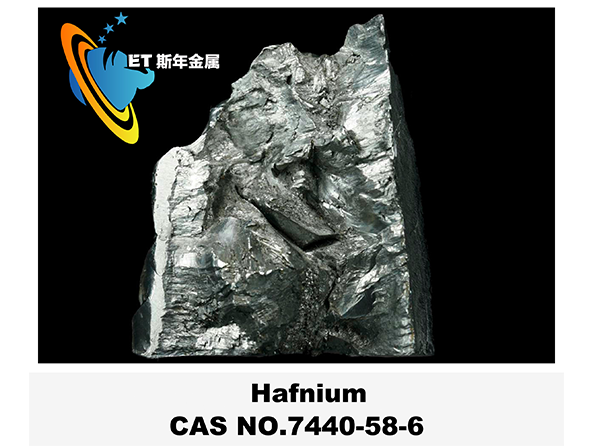
CAS # : 7440-58-6
Molecular Formula: Hf
EC No.: 231-166-4


The molecular formula of hafnium metal is Hf, with an atomic number of 72 and an atomic weight of 178.49. It is a lustrous silver-gray transition metal. Hafnium has six naturally stable isotopes: hafnium 174, 176, 177, 178, 179 and 180. Hafnium does not react with dilute hydrochloric acid, dilute sulfuric acid or strong alkaline solutions, but it is soluble in hydrofluoric acid and aqua regia. Hafnium is a silver-gray metal with a metallic luster. There are two variants of the metal hafnium: α -hafnium is a hexagonal close-packed variant (1750℃), and its transition temperature is higher than that of zirconium. Hafnium metal has allotropic variants at high temperatures. Hafnium metal has a relatively high neutron absorption cross-section and can be used as a control material for reactors. There are two types of crystal structures: at temperatures below 1300℃, it is hexagonal close-packed (α- formula); At temperatures above 1300℃, it is body-centered cubic (β- formula). Metals with plasticity become hard and brittle when impurities are present. It is stable in the air and only darkens on the surface when burned. The filament can be lit with the flame of a match. It is similar in nature to zirconium. It does not react with water, dilute acids or strong bases, but is readily soluble in aqua regia and hydrofluoric acid. It mainly has a +4 valence in compounds. Hafnium alloy (Ta4HfC5) is the substance with the highest known melting point (approximately 4215℃).
1. It is used for making heat-resistant alloys.
2. It is used for making neutron absorption in the nuclear industry.
3. It is used for making absorbents.
Product | Product Code | Security Data | Technical Data |
Hafnium Metal 99.9% | ET-HfM-01 | ||
Hafnium Metal 99.99% | ET-HfM-01 |
Molecular Weight | 178.49 |
Appearance | Silver |
Melting Point | 2227°C |
Boiling Point | 4602°C |
Density | 13.31 g/cm3 |
Resistivity | 35.1 microhm-cm @ 25°C |
Electronegativity | 1.3 Paulings |
Heat of Vaporization | 155 K-Cal/gm atom at 4602°C |
Poisson's Ratio | 0.37 |
Specific Heat | 0.035 Cal/g/K @ 25 °C |
Tensile Strength | N/A |
Thermal Conductivity | 0.230 W/cm/K @ 298.2 K |
Thermal Expansion | (25 °C) 5.9 µm·m-1·K-1 |
Vickers Hardness | 1760MPa |
Young's Modulus | 78 GPa |
Signal Word | N/A |
Disclaimer | N/A |
Dangerous Code | N/A |
Preventive Instructions | P210 |
Flash Point | N/A |
Risk Code | N/A |
Safety Statement | N/A |
RTECS Number | MG4600000 |
Transportation Information | NONH |
WGK Germany | nwg |
Packaging Specifications:
Standard packaging: 50 kg/drum, 500 kg/pallet, ton bags
Sample packaging: 500 g/bag, 1 kg/bottle
| Hafnium |

It can be prepared by reducing hafnium tetrachloride with magnesium or by thermally decomposing hafnium tetriodide. HfCl4 and K2HfF6 can also be used as raw materials. It is produced by electrolysis in a NaCl-KCl-HfCl4(or K2HfF6) melt, and the process is similar to that of the electrolytic production of zirconium. Hafnium mostly coexists with zirconium and there is no hafnium raw material that exists alone. At present, the raw material for manufacturing hafnium is crude hafnium oxide separated in the process flow of manufacturing zirconium. Hafnium oxide is extracted by the method of ion exchange resin, and then metallic hafnium is prepared from this hafnium oxide by the same method as zirconium. Hafnium is very useful because it emits electrons easily (such as being used as the filament of incandescent lamps). Hafnium is used as the cathode of X-ray tubes, and alloys of tungsten or molybdenum are used as electrodes of high-voltage discharge tubes. It is commonly used as the cathode for X-rays and in the tungsten wire manufacturing industry. Pure hafnium is malleable, easy to process, resistant to high temperatures and corrosion, and is an important material in the atomic energy industry. Hafnium has a large thermal neutron capture cross-section and is an ideal neutron absorber. It can be used as a control rod and protective device in atomic reactors. Hafnium powder can be used as a rocket thruster. In the electrical industry, the cathode of X-ray tubes can be manufactured. Hafnium alloys can be used as the front protective layer for rocket nozzles and gliding re-entry vehicles. Hafnium-tantalum alloys can be used to manufacture tool steel and resistance materials. Hafnium is used as an additive element in heat-resistant alloys. For instance, hafnium is added to some alloys of tungsten, molybdenum and tantalum. Hafnium carbide, due to its high hardness and melting point, can be used as an additive for hard alloys. The melting point of 4TaCHfC is approximately 4215℃, making it the compound with the highest known melting point. Hafnium can be used as an air-absorbing agent in many inflation systems. Hafnium getter can remove oxygen, nitrogen and other unwanted gases present in the system. Hafnium is often used as an additive in hydraulic oil to prevent the evaporation of hydraulic oil during high-risk operations. It has strong anti-volatility properties. Due to this characteristic, it is generally used in industrial hydraulic oil and Medical hydraulic oil. |

Room 310, Building 1, No. 326, Jinyuan Third Road, Jiading District, Shanghai
Tel : +86-400-6632276
Mobile&Whatsapp : +86 19916550170
Email : sales@eternal-element.com
Scan to wechat :


