Hello!Welcome to Shanghai Sheeny Metal Materials Co.,Ltd. Website!
Hotline:+86-400-6632276

01 Overview of Dolomite
Dolomite can be considered a double salt composed of magnesite and calcite. Its main chemical component is CaMg(CO₃)₂, with a theoretical composition (ω/%) of: MgO 21.7%, CaO 30.4%, and CO₂ 47.90%. It is often associated with mineral impurities such as quartz and feldspar [1]. The theoretical decomposition temperature of dolomite ranges from 730 to 900°C. Between 730 and 790°C, it decomposes into free MgO and CaCO₃, while CaCO₃ decomposes at around 900°C [2].
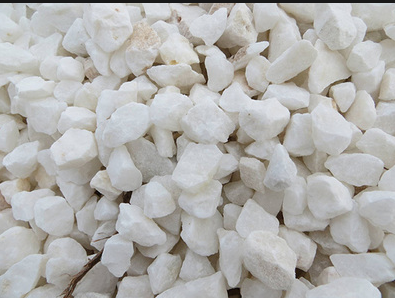
Pure dolomite is white; iron-bearing varieties appear gray or dark brown, and weathered surfaces turn brown. The origin of dolomite varies by location, leading to compositional deviations from its theoretical values [1].
Main Mineral Composition of Dolomite in Key Mining Areas of China (%)
Based on the Ca/Mg ratio, dolomite can be classified into magnesitic dolomite (1.0–1.5), dolomite (1.5–1.7), micro-calcite dolomite (1.7–2.0), calcite dolomite (2.0–3.5), and pure dolomite (1.648) [1].
Currently, the utilization of magnesium from dolomite across various industries is relatively well-developed, while the development and utilization of calcium remain insufficient. Calcium is often used to produce low-value-added building materials or fillers, resulting in significant waste of calcium resources. Therefore, while ensuring the supply of raw materials for bulk metal industries such as steelmaking and magnesium smelting, fully utilizing the calcium and magnesium resources to develop high-purity, high-value-added calcium and magnesium products has become a research hotspot in the deep processing and comprehensive development of dolomite mineral resources [3].
02 Technologies for Preparing Calcium Carbonate from Dolomite
2.1 Calcium Separation Technologies from Dolomite
The key to fully utilizing calcium and magnesium resources in dolomite lies in the efficient separation of calcium and magnesium and the effective removal of other impurities. Current technologies for calcium-magnesium separation and impurity removal mainly include the carbonization method, acid dissolution method, ammonium leaching method, brine-dolomite method, and complexation leaching method [3].
Among these, the carbonization method is the most commonly used industrially due to its simple process, low cost, and ease of industrial implementation. It produces lightweight (nano) calcium carbonate through a "calcination-carbonization" system. Further purification yields high-quality calcium carbonate products, while the filtrate is a recoverable Mg(HCO₃)₂ solution [2]. However, since both calcium hydroxide and magnesium hydroxide participate in carbonization, simultaneously obtaining calcium carbonate and magnesium hydroxide products during the carbonization process remains challenging [4].
Significant research progress has also been made in acid dissolution, ammonium leaching, and brine-dolomite methods. However, these methods still face challenges such as complex processes, high production costs, and significant pollution [4].
2.2 Preparation Processes
2.2.1 Carbonization Method
The carbonization method is the most commonly used technique for separating calcium and magnesium from dolomite. It relies on the difference in solubility of CaCO₃ and Mg(HCO₃)₂ in aqueous solutions by controlling the endpoint pH of the carbonization process [3]. As illustrated below, after calcination and digestion, the resulting dolomite lime milk is reacted with purified CO₂ from kiln gas. Under controlled process conditions, CaCO₃ (precipitate) and Mg(HCO₃)₂ (heavy magnesium water) are formed. After solid-liquid separation, lightweight CaCO₃ is obtained. The filtrate, heavy magnesium water, is thermally decomposed to produce a basic magnesium carbonate intermediate, which is then calcined to produce MgO [3].
Process Flow Diagram of the Carbonization Method for Calcium-Magnesium Separation from Dolomite
The carbonization method offers the advantages of a simple process and low production cost. However, this method relies solely on controlling process conditions during carbonization to achieve calcium-magnesium separation, aiming to maximize the formation of Mg(HCO₃)₂ while minimizing Ca(HCO₃)₂. In practice, precise control of process conditions is difficult, often resulting in calcium and magnesium products of relatively low purity [3].
To improve product purity, various modified carbonization techniques have been developed, including batch recovery, secondary carbonization, pressurized carbonization, and additive-assisted carbonization.
2.2.2 Ammonium Leaching Method
The ammonium leaching method uses the weak acidity of ammonium salt solutions ((NH₄)₂SO₄, NH₄Cl, NH₄NO₃) to react with digested dolomite lime. This produces solutions of calcium and magnesium salts, which can then be reacted with NH₃ or CO₂ as needed to obtain the corresponding calcium and magnesium products [5]. This method is easy to operate, involves mild reactions, effectively separates calcium and magnesium from dolomite, and yields high-purity calcium and magnesium products.
Process Flow Diagram of the Ammonium Chloride Leaching Method for Calcium-Magnesium Separation from Dolomite
2.2.3 Brine-Dolomite Method
The brine-dolomite method involves adding digested dolomite lime dropwise into brine (MgCl₂) to produce magnesium hydroxide. After filtration and drying, Mg(OH)₂ powder is obtained. The filtrate can be further processed to prepare CaCO₃ [5].
Process Flow Diagram of the Brine-Dolomite Method for Calcium-Magnesium Separation from Dolomite
The brine-dolomite method offers advantages such as low process cost and minimal pollution. It effectively utilizes magnesium resources from both brine and dolomite lime, achieving relatively complete separation of calcium and magnesium from dolomite. However, a significant drawback is the generation of large quantities of calcium chloride solution as a byproduct, which is difficult to handle [5].
03 Research Progress in Calcium-Magnesium Separation from Dolomite and Preparation of Calcium Carbonate
3.1 Carbonization Method
Wang Wenze et al. [6] prepared lightweight CaCO₃ using a phase-transfer carbonization method with calcined dolomite powder as raw material. Through single-factor and orthogonal experiments, the optimized phase-transfer conditions were determined: liquid-solid ratio of 20 mL/g, n(ammonium citrate): n(CaO) = 4:3, reaction temperature of 20°C, and reaction time of 10 min. The optimized carbonization conditions were: endpoint pH of 7.6, CO₂ flow rate of 0.6 L/min, reaction temperature of 65°C, and stirring speed of 550 r/min. Under these conditions, calcium carbonate with a purity of 98.18% was produced, exhibiting uniform particle size and good dispersibility. After two cycles of calcium-magnesium separation from the calcined dolomite powder, "calcium free of magnesium" was essentially achieved, significantly improving the purity of the calcium product.
Wang Xin et al. [11] investigated the extraction of calcium from calcined dolomite powder using a citric acid-ammonium solution. The extraction rates for Ca²⁺ and Mg²⁺ were 99.34% and 6.11%, respectively. Carbonization of the calcium citrate yielded a calcite-type lightweight CaCO₃ with ω(CaCO₃) = 98.2%, relatively uniform size (approximately 2 μm in length and 0.6 μm in width), and a spindle-like shape. The filter cake, after hydration, carbonization, thermal decomposition, and calcination, produced an MgO sample with ω(MgO) = 99.2%, relatively uniform size (approximately 4 μm in length and 0.5 μm in width), and a short rod-like shape.
Yu Feng et al. [12] used a high-concentration refined dolomite solution as raw material to prepare aragonite-type calcium carbonate whiskers with a high aspect ratio via the carbonization method. The study investigated the effects of carbonization temperature, stirring rate, CO₂ flow rate, and aging time on the dispersion and aspect ratio of the calcium carbonate. The results yielded a calcium carbonate product with a yield of 95%, a whisker aspect ratio of 30–35, a whisker content of 99.7%, and a whiteness of 99.9%, with uniform distribution. Analysis of the growth mechanism indicated that Mg²⁺ inhibited the growth of calcite-type calcium carbonate and promoted the growth of aragonite-type calcium carbonate, preferentially along the (120) crystal plane.
3.2 Ammonium Leaching Method
Fan Yuanyang et al. [5] used dolomite lime and a recycled ammonia solution as raw materials to prepare calcium carbonate whiskers and magnesium hydroxide through a cyclic process of ammonia distillation, magnesium precipitation, and calcium precipitation. In cyclic experiments, an optimal Ca/Mg to ammonium salt molar ratio of 1:2 was determined, achieving extraction rates of 91.32% for Ca²⁺ and 90.95% for Mg²⁺. The study confirmed that preparing calcium carbonate whiskers in three cycles was optimal, as more than three cycles significantly impacted the morphology of the calcium carbonate product, which maintained a calcium carbonate content of 98%. PVC addition experiments with the calcium carbonate whisker product showed a maximum tensile strain of 225% and a maximum tensile stress of 13 MPa for the PVC material, indicating enhanced toughness and providing strong support for the product's practical applicability.
Deng Xiaoyang et al. [7] used lightly calcined dolomite powder, ammonium chloride, and carbon dioxide as raw materials to prepare well-shaped, uniformly distributed cubic-like calcium carbonate crystals with an average particle size of 5–10 μm via an ammonia distillation and calcium precipitation process without the use of crystal morphology control agents.
Jia Xiaohui et al. [8] explored methods for separating calcium and magnesium from dolomite and proposed a two-step separation method using an ammonium chloride solution, first extracting calcium and then magnesium. The calcium extraction rate from dolomite exceeded 95%. The obtained calcium-rich digestion solution was used in a CaCl₂-NH₃-CO₂ reaction system to achieve controlled synthesis of metastable vaterite and aragonite calcium carbonate. The vaterite content reached 97.69%, with a specific surface area of 32.653 m²/g and an average pore size of 2.972 nm.
Fan Tianbo et al. [9] employed a modified Solvay ammonia-soda method using dolomite as raw material without any organic additives to prepare calcium carbonate with a high vaterite content under alkaline conditions. The resulting sample had a specific surface area of 32.653 m²/g and a pore size of 2.972 nm, providing a favorable space for biomolecule loading. Analysis of the vaterite formation mechanism indicated that the NH₄⁺-NH₃ buffer system not only increased the supersaturation of calcium carbonate but also improved the solution environment, facilitating the growth of well-formed vaterite crystals. The trace amount of Mg²⁺ in the solution played a role in promoting the formation of perfect crystal morphologies.
Wang Dongyi et al. [10] used dolomite ore as raw material to prepare magnesium hydroxide and calcium carbonate whiskers through a process of calcination, ammonia distillation, and precipitation. During the ammonia distillation stage, the effect of different molar ratios of lightly calcined dolomite lime to NH₄⁺ on the conversion rates of Ca²⁺ and Mg²⁺ in the refined solution was investigated. During the calcium precipitation stage, the effects of different anions and cations in the refined solution, reaction temperature, gas flow rate, and the molar ratio of Ca²⁺ to CO₂ on the morphology of the calcium carbonate whiskers were explored. The prepared calcium carbonate whisker product had an aspect ratio of 20, a whiteness of 98.7, and a Ca²⁺ conversion rate of 80.75%. The entire process involved material recycling, achieving environmental protection and resource savings.
3.3 Hydrochloric Acid Method
Wu Feng et al. [2] used dolomite as raw material, hydrochloric acid as the leaching agent, and Ca(OH)₂ and NaOH as pH regulators to prepare industrial-grade lightweight calcium carbonate for applications such as rubber and plastics via the carbonization method. The study investigated the effects of calcination, leaching, and carbonization conditions on the properties of the calcium carbonate. The results showed that calcining dolomite at 900°C for 30 min produced lightly calcined dolomite with a CaO content of approximately 64.14%. Under conditions of a solid-liquid ratio of 1:4, stirring at 20°C for 60 min, aging for 2.0 h, adjusting the pulp pH to 1.0 with 3.0 mol/L hydrochloric acid, and stirring at 80°C for 30 min, the Ca²⁺ leaching rate reached 99.38%. A staged pH adjustment process was used to remove iron and manganese ions. The filtrate was then carbonized by passing CO₂ at a flow rate of 100 mL/min under a stirring speed of 800 r/min until the slurry pH reached 7.6. This yielded lightweight calcium carbonate with a median particle size D50 of 2.404 μm, an average purity of 99.04%, and an average whiteness of 98.76. By optimizing the pH of the leaching system and partially replacing NaOH with Ca(OH)₂ to adjust the pH, the chemical cost was effectively reduced, significantly improving the process economics. This study provides a reference for the industrial application of dolomite in preparing high-value-added calcium carbonate.
04 Conclusion
Current technologies for calcium-magnesium separation from dolomite are rapidly advancing. Although not yet fully mature, laboratory-scale calcium extraction rates approach 99%, essentially achieving "calcium free of magnesium" and enabling the production of high-purity calcium carbonate (purity up to 99%). The resulting calcium carbonate exhibits diverse morphologies, including cubic, spindle-like, whisker-like, and vaterite forms, with uniform particle size and high whiteness.
Disclaimer: The content of the article is sourced from the internet. All reprinted articles are solely for the purpose of learning and exchange, not for commercial use. If there is any infringement, please contact us promptly for deletion. Thank you for your understanding and support.

Room 310, Building 1, No. 326, Jinyuan Third Road, Jiading District, Shanghai
Tel : +86-400-6632276
Mobile&Whatsapp : +86 19916550170
Email : sales@eternal-element.com
Scan to wechat :


